Pages

Friday, August 17, 2018

Memento mori

Let’s talk of graves, of worms, and epitaphs,
Make dust our paper, and with rainy eyes
Write sorrow on the bosom of the earth.
Let’s choose executors and talk of wills.
And yet not so, for what can we bequeath
Save our deposèd bodies to the ground?
Our lands, our lives, and all are Bolingbroke’s,
And nothing can we call our own but death
And that small model of the barren earth
Which serves as paste and cover to our bones.
For God’s sake, let us sit upon the ground
And tell sad stories of the death of kings—
How some have been deposed, some slain in war,
Some haunted by the ghosts they have deposed,
Some poisoned by their wives, some sleeping killed,
All murdered. For within the hollow crown
That rounds the mortal temples of a king
Keeps Death his court, and there the antic sits,
Scoffing his state and grinning at his pomp,
Allowing him a breath, a little scene,
To monarchize, be feared, and kill with looks,
Infusing him with self and vain conceit,
As if this flesh which walls about our life
Were brass impregnable; and humored thus,
Comes at the last and with a little pin
Bores through his castle wall, and farewell, king!
Cover your heads, and mock not flesh and blood
With solemn reverence. Throw away respect,
Tradition, form, and ceremonious duty,
For you have but mistook me all this while.
I live with bread like you, feel want,
Taste grief, need friends. Subjected thus,
How can you say to me I am a king? 
(Richard II III.ii.150-182)
I didn’t appreciate Richard II in quite the way that Shakespeare intended it until I encountered corruption myself. Richard II was a far cry from the ruthlessness of Richard III, but his weakness is just as reprehensible as the latter’s criminality. I am naturally cautious, and I have learned that timidity can wield just as much injustice as tyranny. Sin overturns kingdoms with disturbing rapidity.

Monday, April 16, 2018

Sweet peace

The doubt which ye misdeeme, fayre loue, is vaine
That fondly feare to loose your liberty,
when loosing one, two liberties ye gayne,
and make him bond that bondage earst dyd fly.
Sweet be the bands, the which true loue doth tye,
without constraynt or dread of any ill:
the gentle birde feeles no captiuity
within her cage, but singes and feeds her fill.
There pride dare not approch, nor discord spill
the league twixt them, that loyal loue hath bound:
but simple truth and mutuall good will,
seekes with sweet peace to salue each others wound
There fayth doth fearlesse dwell in brasen towre,
and spotlesse pleasure builds her sacred bowre.
 (Spenser, Amoretti, #65)

Wednesday, April 4, 2018

In my end is my beginning

I'm in a seminar on T.S. Eliot this semester, and lately we've been reading his Four Quartets. The final stanzas of "East Coker" struck me as particularly beautiful. I've often encountered poetic interventions in life, when a piece crosses my path precisely when I need it most; it's both poignant and cathartic. This was one of those.
Home is where one starts from. As we grow older
The world becomes stranger, the pattern more complicated
Of dead and living. Not the intense moment
Isolated, with no before and after,
But a lifetime burning in every moment
And not the lifetime of one man only
But of old stones that cannot be deciphered.
There is a time for the evening under starlight,
A time for the evening under lamplight
(The evening with the photograph album).
Love is most nearly itself
When here and now cease to matter. 
Old men ought to be explorers
Here and there does not matter
We must be still and still moving
Into another intensity
For a further union, a deeper communion
Through the dark cold and empty desolation,
The wave cry, the wind cry, the vast waters
Of the petrel and the porpoise. In my end is my beginning.
My life is not my own; I do not reserve the right to tell God how I serve Him. Peace comes from obedience. 

Friday, March 23, 2018

A concession

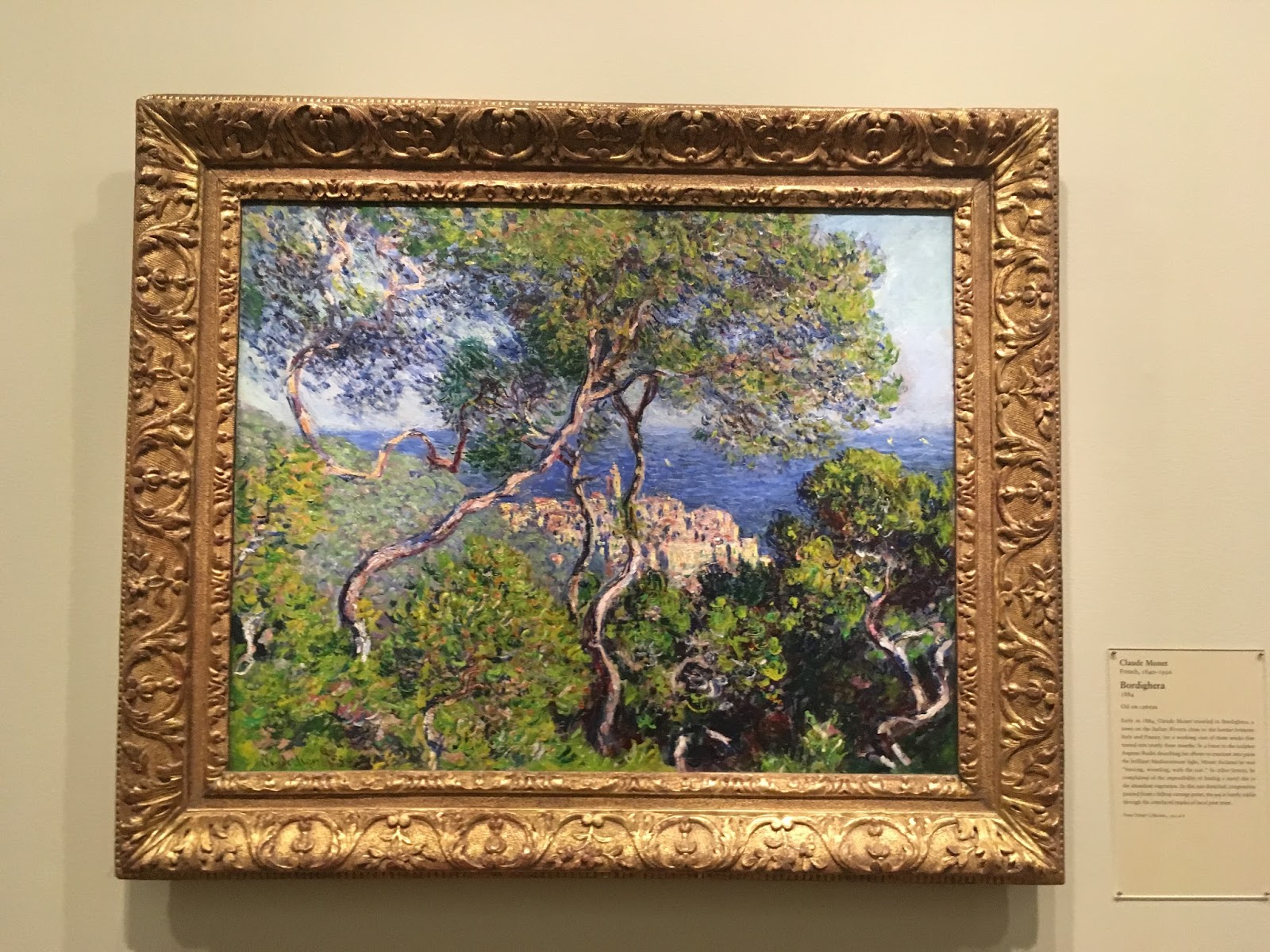
Obligatory Impressionist painting accompanying Victorian novel
 
"We all of us, grave or light, get our thoughts entangled in metaphors, and act fatally on the strength of them." 
 George Eliot, Middlemarch
I recently sat for my MA exam, and studying for this meant ingesting as much of a 36-author reading list as possible. The idea is to produce graduates who are generalists in Anglophone literature, so the list included everyone from Marie de France (who is a PARTAY and deserves a post of her own) to Salman Rushdie.* One of the authors I had to meet for the first time was George Eliot. Going into it, I was pretty stoked to read Middlemarch, because I had heard so much about it from authors I respect, who highlighted its discussion of female agency and intellectualism. Unfortunately, my longstanding struggle with literary Realism was not about to dissipate, and Middlemarch required some of the most stamina I have ever needed in order to finish a book. I couldn't deal with all....that....detail. The entire time reading, I couldn't help thinking that what Eliot would take 150 pages to write, Austen could say in one paragraph. Oh well. (Also Dorothea Brooke is one of the most annoying characters I have encountered. So much for cool, intellectual heroines.)

ANYWAY, I didn't intend for this post to be a rant about Victorian novels. Instead, the above quote turned itself over and over in my head as I read Middlemarch, and I think it's a perfect summary of the novel as a whole. Hypothetical Reader, do not bother trying to tackle all 800 pages of that book; this quote is all you need to know. #lifehacks However, beyond the quote's nature as a key to reading the novel, I really liked it for its own merit as well. Eliot was spot on in diagnosing why we make so many of the stupid decisions we later (or instantly) regret. I was going to try writing a whole blog post expanding on this quote, but the more I try, the more I realize that it really just stands on its own. There is a tangible power to metaphor, and having the self-awareness to recognize how this plays on your perception of the world is incredibly valuable.

Even though I hated almost my entire experience of reading Middlemarch, I consider it worth it for just that one insight.


----------
* No, I did not read all 36. This is grad school, remember? The true learning objective is being able to correctly guess which items on an unreasonable reading list are the ones you're supposed to know. Pamela did not make the cut.**
** I would like to add that said exam, in an administrative decision undoubtedly sadistic, took place DURING SPRING BREAK.***
*** All professors seemed to have forgotten the imminence of said exam and assigned us EXTRA homework in the weeks leading up to it. Ok, rant over, I promise.

Wednesday, March 21, 2018

In which I orate


Apparently reading a different VanDrunen book each year has become a tradition for me:
“According to Scripture...marriage is an exalted state. But it is not the only God-pleasing state in which we can live. While the church does well to affirm marriage and childbearing, it often does a disservice to many of its members by marginalizing the nonmarried and the childless. This can happen in various ways. For example, it can happen when churches advertise themselves as being family friendly or as supporting family values, even when many of their members do not have a family, at least not a spouse or children. It can happen when churches treat unmarried adults simply as those who are not yet married, as if their lives are in a holding pattern until marriage brings meaning to them. It can happen when Christians segregate their social lives, as if the people who are married with children should primarily associate with each other and unmarried people with each other (and, when they do mingle, by people talking incessantly about their children as if those without children find such conversations just as fascinating as they do). It can happen when Christians raise girls as if being a wife and mother is the only worthy goal to pursue in life, such that those who do not marry and have children feel that they have somehow failed and are unprepared to find valuable things to do.” 
(Bioethics and the Christian Life, p. 100)
I’ve long been convinced that this is one of the ways the Church today often falls into profound self-destruction. Every one of VanDrunen’s examples has been deeply relatable for me, not only in the local church but the culture of Christianity at large. Touting ourselves as “family friendly” does at least as much harm as the good it believes itself to do, because doing so marginalizes the very demographic that Scripture itself claims is most physically able to serve the church. Furthermore, identifying ourselves primarily by “family values” is indicative of an underlying social gospel - “moral” conduct is now more important than purity of worship or theological integrity. It’s impossible to get the “practical” aspects of Christian living right if we don’t understand them as a product of God-glorifying doxology and doctrine first; failure to do so leads to legalism and, often, abuse.

The best examples of church life I have witnessed were cases in which the church’s theology and worship flowed into proper relationships between members of the congregation; single people in particular were valued for their own sake. They were not treated as inconvenient problems to be solved, second-class adults waiting to finally “grow up,” and they were neither patronized nor exploited. They were seen as individuals who had something to offer to the rest, and were encouraged to maximize these abilities. The fruit of such an attitude played out in the singles’ active involvement in church life. The church needed them. I can’t help but think how much more our churches could flourish if they shared this attitude.

Living in the church for 24 years, I have witnessed how a change in an individual's relationship status can launch - overnight - a flurry of invitations and overtures of friendship which had previously never been offered. This kind of thing can't go on. If there is only one practical takeaway from this post, let it be this: Treat singles as equals (because that's exactly what they are before God).

Thursday, March 8, 2018

Atta boy Sidney

Since, then, poetry is of all human learnings the most ancient and of most fatherly antiquity, as from whence other learnings have taken their beginnings; since it is so universal that no learned nation doth despise it, nor barbarous nation is without it; since both Roman and Greek gave divine names unto it, the one of “prophesying,” the other of “making,” and that indeed that name of “making” is fit for him, considering that whereas other arts retain themselves within their subjects, and receive, as it were, their being from it, the poet only bringeth his own stuff, and doth not learn a conceit out of a matter, but maketh matter for a conceit; since neither his description nor his end containeth any evil, the thing described cannot be evil; since his effects be so good as to teach goodness, and delight the learners of it; since therein—namely in moral doctrine, the chief of all knowledges—he doth not only far pass the historian, but for instructing is well nigh comparable to the philosopher, and for moving leaveth him behind him; since the Holy Scripture, wherein there is no uncleanness, hath whole parts in it poetical, and that even our Saviour Christ vouchsafed to use the flowers of it; since all his kinds are not only in their united forms, but in their several dissections fully commendable; I think, and think I think rightly, the laurel crown appointed for triumphant captains doth worthily, of all other learnings, honor the poet’s triumph. 
(The Defense of Poesy, The Major Works, Oxford, p. 232)

Wednesday, January 31, 2018

2018

Do not go gentle into that good night,
Old age should burn and rave at close of day;
Rage, rage against the dying of the light.

Though wise men at their end know dark is right,
Because their words had forked no lightning they
Do not go gentle into that good night.

Good men, the last wave by, crying how bright
Their frail deeds might have danced in a green bay,
Rage, rage against the dying of the light.

Wild men who caught and sang the sun in flight,
And learn, too late, they grieved it on its way,
Do not go gentle into that good night.

Grave men, near death, who see with blinding sight
Blind eyes could blaze like meteors and be gay,
Rage, rage against the dying of the light.

And you, my father, there on the sad height,
Curse, bless, me now with your fierce tears, I pray.
Do not go gentle into that good night.
Rage, rage against the dying of the light.
(Dylan Thomas, 1951)
Technically, this poem is Dylan Thomas's meditation upon the aging of his father and fight against imminent death. It's consistently been lurking in the back of my mind for the past few months, and I think there is more to its call to arms than simply resistance to physical mortality. I read Thomas's "rage" not as an act of violence or wrath, but rather as a nuanced manifestation of fierce, principled persistence. It brings to mind the literary types of the tragic and pathetic. The latter is passive, too consumed with the pathos of the moment to make any more attempt at resistance in the face of defeat. The tragic, however, dies fighting. In a spiritual sense, it is connected with Watson's imagery of Heaven being taken by storm. Leaving this here as a reminder that my faith, my church, my hope are all things I can never take for granted or give up in despair; through God's grace, they are things worth fighting for.

Thursday, December 7, 2017

In which I take shots at my own kind


There's a rather ubiquitous piece of advice from Luther that amounts to this: if you want to be a good Christian cobbler, don't make mediocre shoes with crosses on them; make good shoes. This might be the best way to explain my dislike for the growing number of movements trying to get women into theology. I know this sounds like I've lost my mind, but hear me out.

In theory, the idea is great. There's still a disheartening lack of interest in knowing God in the female demographics of the church. Nobody would ever admit it when phrased this way; instead, it's the dismissive comments about how men split hairs over doctrine or the need to make bible/book studies "fun." We're still plagued by the myth that there is no real benefit to such abstract study. So yes, there's still a long way to go.

What I find to be deeply problematic is the difficult time these movements have in getting around to discussing actual theology.

There's one popular site that brands itself as a hard-hitting community of doctrinally-minded women responding to issues in the culture at large. Lots of aggressive socio-political commentary, but I have yet to find a post dedicated to any theological topic. I find this particularly destructive, not only because of the way it promotes a belligerent brand of Christianity, but also in the way it turns the purported study of divinity into something very human-focused. It's culture wars masquerading as theology.

Another, related, mistake I often see is the conflation of theology proper and Christian living. Aspiring to be a virtuous student/employee/wife/mother is commendable, but that discussion is not theology. We apply our theology to such situations, yes, but the actions that follow are the result of what we believe about God; they are not the beliefs themselves.

Finally, these movements have a tendency to create a very gendered version of theology. Very often, books marketed for women suffer from poor doctrine and a domestic model of femininity. But, beyond these issues - why do we need to write theology books for women? Why can't we read Owen and Turretin along with the men? Why can't a woman's book be marketed as simply another theological book, and not something distinctively feminine? I refer to the Luther analogy at the beginning of the post. If you strive for excellence as a woman theologian, don't write some sloppy theology and slap a floral cover on it; produce something that lives up to the standards of both our confessional heritage and academia.

Wednesday, November 15, 2017

On loss and thanksgiving

Som natural tears they drop'd, but wip'd them soon;
The World was all before them, where to choose
Thir place of rest, and Providence thir guide:
They hand in hand with wandring steps and slow,
Through Eden took thir solitarie way.
(Paradise Lost XII.645-649)
My freshman year, in my 17th C poetry class, my professor taught us that one of the most important things we could learn as fallen humans is how to lose. Not "lose" in the sense of a competition, but rather a bereavement. If we could learn to cope with loss successfully, we would be able to grow from the traumas we (inevitably) experience in life, rather than destroy ourselves and others in them. That kind of thing is difficult for an invincible 19-year-old to absorb, although in my case, the recent death of my father was an imminent validation of my professor's point. I don't think anybody wants to dwell on the possibility of losing the things they love most dearly.

This past year, with its collection of anniversaries, revisits, and - quite frankly - disasters, has foregrounded the problem of loss in an inescapable way. Parts of 2017 remind me of 2012, especially in the uncomfortable proximity between extremes that I keep encountering. This has been the most difficult part of "learning to lose" for me to grasp: how do you make sense of gaining and losing when both are happening simultaneously? Loving what cannot be kept, trusting in the wake of betrayal, discovering joy amid sorrow; the past five years have taught me that these are choices, and that they are both exhausting and cyclical.

My professor highlighted this tension in Paradise Lost, as Milton resolves it as a felix culpa, or fortunate fall; we would not experience the joy and hope of redemption if it were not for the despair of the Fall. I'm uncomfortable with the theological assumptions behind this; I get nervous any time we start speaking about the Fall in terms that could suggest necessity or inevitability. Grace, however, is a staggering intervention in it.

I suspect that I will always struggle with the close relationship between gain and loss, but one thing I am learning from my experience in it is gratitude. Despite how bewildering it can be, each instance of blessing amid trial is a mercy from God. We cannot survive the sorrows of this world without divine grace, and sometimes joy amid sorrow is one of the ways God softens the darkness of His providence. We do well to hope in the Gospel present in the curse of Genesis 3.

I read Philippians 4.4-9 recently, and it made me realize how powerful an attitude of thanksgiving is. Gratitude is the core of our sanctification, and I can't think of a more effective response to loss than meditation upon the mercies and goodness God has shown us in our lives.
Rejoice in the Lord always; again I will say, rejoice! Let your gentle spirit be known to all men. The Lord is near. Be anxious for nothing, but in everything by prayer and supplication with thanksgiving let your requests be made known to God. And the peace of God, which surpasses all comprehension, will guard your hearts and your minds in Christ Jesus. 
Finally, brethren, whatever is true, whatever is honorable, whatever is right, whatever is pure, whatever is lovely, whatever is of good repute, if there is any excellence and if anything worthy of praise, dwell on these things. The things you have learned and received and heard and seen in me, practice these things, and the God of peace will be with you.

Monday, September 18, 2017

Shall thy work decay?

Lately, I've learned how easy it is to read this sonnet from a corporate point of view. The pain and tangible sense of struggle is visceral.
Thou hast made me, and shall thy work decay?
Repair me now, for now mine end doth haste,
I run to death, and death meets me as fast,
And all my pleasures are like yesterday;
I dare not move my dim eyes any way,
Despair behind, and death before doth cast
Such terror, and my feeble flesh doth waste
By sin in it, which it t'wards hell doth weigh;
Only thou art above, and when towards thee
By thy leave I can look, I rise again;
But our old subtle foe so tempteth me,
That not one hour my self I can sustain;
Thy Grace may wing me to prevent his art,
And thou like Adamant draw mine iron heart.

(John Donne, Holy Sonnet #1)
Thankful for God's answer of a resounding "NO" in Romans 8. The trials we undergo do not hamper His kingdom but ultimately strengthen it. Nothing will stop Him from working out our salvation, or, by extension, the good of the Church. We survive by holding onto His promises.

"For in hope we have been saved, but hope that is seen is not hope; for who hopes for what he already sees? But if we hope for what we do not see, with perseverance we wait eagerly for it." (Romans 8.24-25)