Pages

Thursday, October 16, 2014

The Pearl

MATTHEW xiii
I know the ways of learning; both the head
And pipes that feed the press, and make it run;
What reason hath from nature borrowed,
Or of itself, like a good huswife, spun
In laws and policy; what the stars conspire,
What willing nature speaks, what forc'd by fire;
Both th'old discoveries and the new-found seas,
The stock and surplus, cause and history;
All these stand open, or I have the keys:
         Yet I love thee.
I know the ways of honour; what maintains
The quick returns of courtesy and wit;
In vies of favours whether party gains
When glory swells the heart and moldeth it
To all expressions both of hand and eye,
Which on the world a true-love-knot may tie,
And bear the bundle wheresoe'er it goes;
How many drams of spirit there must be
To sell my life unto my friends or foes:
         Yet I love thee.
I know the ways of pleasure; the sweet strains
The lullings and the relishes of it;
The propositions of hot blood and brains;
What mirth and music mean; what love and wit
Have done these twenty hundred years and more;
I know the projects of unbridled store;
My stuff is flesh, not brass; my senses live,
And grumble oft that they have more in me
Than he that curbs them, being but one to five:
         Yet I love thee.
I know all these and have them in my hand;
Therefore not seeled but with open eyes
I fly to thee, and fully understand
Both the main sale and the commodities;
And at what rate and price I have thy love,
With all the circumstances that may move.
Yet through the labyrinths, not my grovelling wit,
But thy silk twist let down from heav'n to me
Did both conduct and teach me how by it
         To climb to thee.
George Herbert

Wednesday, October 1, 2014

8am redemption

So today is Wednesday. I do not like Wednesdays. Up until this semester, they were never offensive to my delicate sensibilities, but this Fall.....whew. My schedule blew up and I am running around from one place to another from 8-5 before I meander back home to go to church. Somewhere I fit all my homework in. Oh my, it's a party.
 
This morning I was radiating joy, what with running late to school and panicking about an exam I had not studied for in a class by a famously difficult professor in a department where blow-off classes do not exist (HISTORY ALWAYS AND FOREVER BABY!!!). The day did not bode well.
 
But then it happened.
 
It was the end of Art History and we had just been discussing this sculpture. The key thing to understand about this period of Greek art is that they had apparently just discovered the smile, and naturally they overdid it and tacked one onto EVERYBODY. Think I'm exaggerating? Just google "Archaic Smile."

My apologies for the naked man, I know this is a family-friendly blog

I think this short exchange just about sums up the class's appreciation for the glory that is this piece of art:
Prof: "What does it look like is happening to him?"
Class: "Dying."
Prof: "How does he feel about it?"
My friend Bethany: "Fabulous."
Anyway, as if this could not be improved upon, within the last minutes of class, I sensed my professor was beginning to feel conflicted about something. After a few moments of consideration, she announced, "Ah, what the heck, we have time. This sculpture reminds me of a video. Have you guys ever seen the worst movie death scene ever?" What followed was the best 68 seconds of class I have yet experienced.
 
 
You'll thank me later.

Saturday, September 27, 2014

On Beatrice Portinari

 
Beyond the widest of the circling spheres
A sigh which leaves my heart aspires to move.
A new celestial influence which Love
Bestows on it by virtue of his tears
Impels it ever upwards. As it nears
Its goal of longing in the realms above
The pilgrim spirit sees a vision of
A soul in glory whom the host reveres.
Gazing at her, it speaks of what it sees
In subtle words I do not comprehend
Within my heart forlorn which bids it tell.
That noble one is named, I apprehend,
For frequently it mentions Beatrice;
This much, beloved ladies, I know well. 
Dante, La Vita Nuova, Sonnet 25
The story of Dante and Beatrice at first glance does not seem like a very appealing romance. The two characters never get around to developing a deep, emotional relationship. In fact, it may have even been one-sided on Dante's part. And it has a tragic ending when Beatrice dies at the age of 24 after having married somebody else. Not exactly satisfying.
 
At the same time, it is one of my favorite love stories. Dante was prevented from ever actualizing his love for Beatrice, but he still considered it the most significant relationship of his life. He never lost sight of her beauty. Not because she was a lovely person in and of herself (although I'm sure she was); instead, Dante saw mirrored in his human love for Beatrice the divine love of God. He went on to flesh this out in the Divine Comedy as he makes his journey from Hell to Heaven to be reunited with Beatrice as she leads him to the presence of God Himself. As they travel through the heavens, her beauty increases as they move closer to Christ.
 
While much of this is clearly allegory, the thing that makes it so forceful for me is how deeply it echoes reality. It wasn't till I was in college and witnessed the dating frenzy myself that I realized just how powerful a girl's influence is over a guy. The stories of Solomon and David being brought down by the women they fell for have acquired a very poignant edge as I've now watched it happen before my eyes. I've also seen how much good a godly girl is able to accomplish through her influence on a young man (even when romantic interest isn't a factor). Beatrice was not afraid to call Dante out when he failed. She maintained a high level of intelligence and self-respect. She was also a kind, gracious individual. She challenged Dante. I think as girls, we tend to underestimate just how important these qualities are in our relationships with guys, be it brother, friend, or partner.
 
In contrast with our culture's abysmally-low expectations, we should appreciate how beautiful it is when people point one another to Christ in their relationships. There's a reason the Bible describes the relationship between Christ and the Church in the language of marriage. Divine love makes human love more beautiful, and human love offers a deeper understanding of divine love.
 
This summer, I came across this sonnet by John Donne which completely reminded me of Dante's view of Beatrice. What a legacy.
Since she whom I loved hath paid her last debt
To Nature, and to hers, and my good is dead,
And her soul early into heaven ravishèd,
Wholly on heavenly things my mind is set.
Here the admiring her my mind did whet
To seek thee, God; so streams do show the head;
But though I have found thee, and thou my thirst hast fed,
A holy thirsty dropsy melts me yet.
But why should I beg more love, whenas thou
Dost woo my soul, for hers offering all thine:
And dost not only fear lest I allow
My love to saints and angels, things divine,
But in thy tender jealousy dost doubt
Lest the world, flesh, yea, devil put thee out.
John Donne, Holy Sonnet 17

Tuesday, September 23, 2014

A quick aesthetic rant

I'm starting to get a little impatient with the people who automatically dismiss a work of art as soon as they hear it is religious. They associate "Christian art" with "bad art." I'm also impatient with the "Christian artists" whose low standards perpetuate the stereotype.
 
Time to revisit the expectations we used to hold ourselves to.
 
Christian Art
 
File:Moses San Pietro in Vincoli.jpg
Christian Art
 
Christian Art

Saturday, September 20, 2014

On reading the great books

One of the most beautiful passages on literature that has crossed my path.
"I had an idea that a Man might pass a very pleasant life in this manner - Let him on a certain day read a certain page of full Poesy or distilled Prose, and let him wander with it, and muse upon it, and reflect from it, and bring home to it, and prophesy upon it, and dream upon it: until it becomes stale - But when will it do so? Never..." 
Keats

Monday, September 15, 2014

The greatness that is Shakespeare

For every person who asks why I still bother to read him:
"Shakespeare is above all writers, at least above all modern writers, the poet of nature; the poet that holds up to his readers a faithful mirror of manners and of life. His characters are not modified by the customs of particular places, unpracticed by the rest of the world; by the peculiarities of studies or professions, which can operate but upon small numbers; or by the accidents of transient fashions or temporary opinions: they are the genuine progeny of common humanity, such as the world will always supply, and observation will always find. His persons act and speak by the influence of those general passions and principles by which all minds are agitated, and the whole system of life is continued in motion. In the writings of other poets a character is too often an individual; in those of Shakespeare is commonly a species."
Samuel Johnson, Preface to Shakespeare 

Reminds me of Cowper

Alexander Pope:
A little learning is a dangerous thing;
Drink deep, or taste not the Pierian spring:
There shallow thoughts intoxicate the brain,
And drinking largely sobers us again.
Fired at first sight with what the Muse imparts,
In fearless youth we tempt the height of arts,
While from the bounded level of our mind
Short views we take, nor see the lengths behind:
But more advanc'd, behold with strange surprise
New distant scenes of endless science rise!
(An Essay on Criticism, 1.15-24)
Every day of my life.

Tuesday, August 19, 2014

Mind = blown

"...it may be said that the Bible certainly does not proceed on the assumption that the divine decree is inconsistent with the free agency of man. It clearly reveals that God has decreed the free acts of man, but also that the actors are none the less free and therefore responsible for their acts, Gen. 50:19, 20; Acts 2:23; 4:27, 28. It was determined that the Jews should bring about the crucifixion of Jesus; yet they were perfectly free in their wicked course of action, and were held responsible for this crime. There is not a single indication in Scripture that the inspired writers are conscious of a contradiction in connection with these matters. They never make an attempt to harmonize the two. This may well restrain us from assuming a contradiction here, even if we cannot reconcile both truths. 
Moreover, it should be borne in mind that God has not decreed to effectuate by His own direct action whatsoever must come to pass. The divine decree only brings certainty into the events, but does not imply that God will actively effectuate them, so that the question really resolves itself into this, whether previous certainty is consistent with free agency." 
Berkhof, Systematic Theology, p. 106
Calvinism is not determinism. Men are not robots. Once again, God brings together two seemingly discordant ideas and causes them to work in harmony together.

I'm becoming completely enamored of systematic theology. There are so many nuances but they all come together in such an elegant whole. In it we begin "to comprehend with all the saints what is the breadth and length and height and depth, and to know the love of Christ which surpasses all knowledge..." (Eph. 3:18-19)

Monday, August 4, 2014

More art history

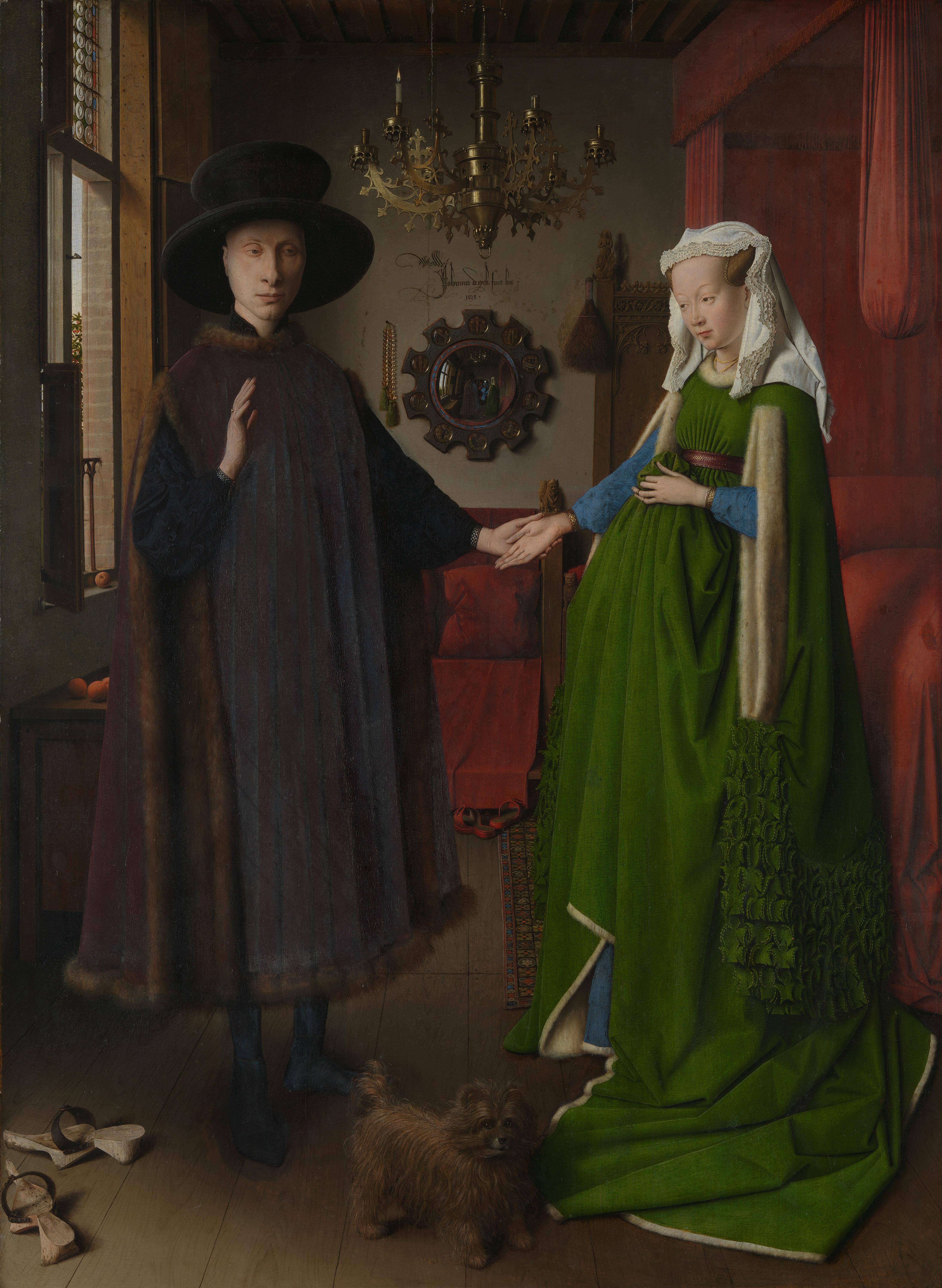
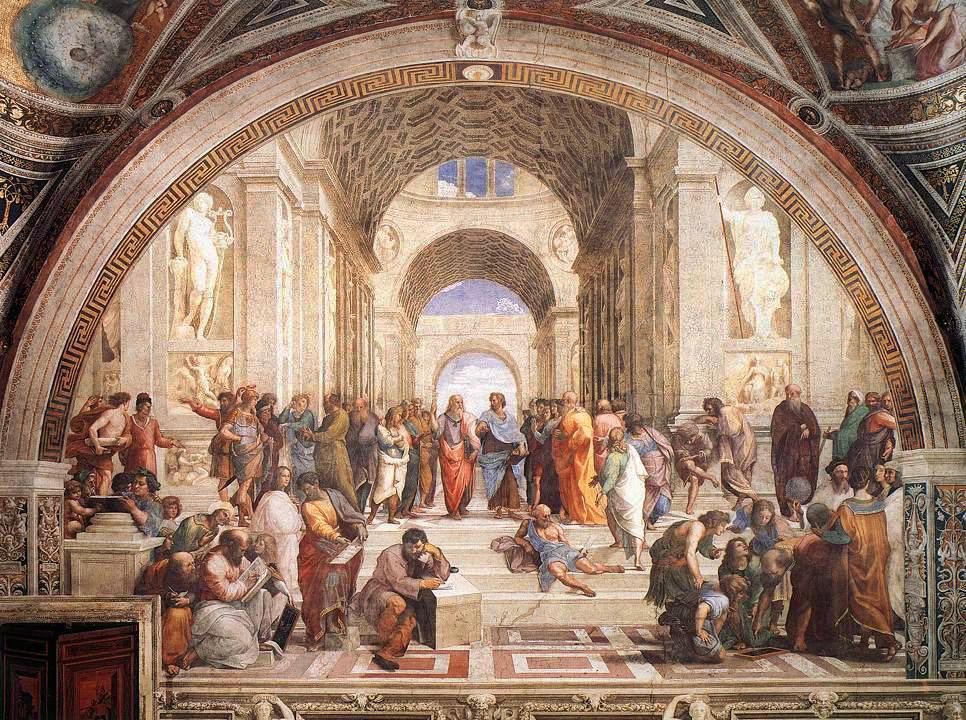
Once again, the school year is about grace us with its presence and as I have another art history class this semester, I am reminded of my aforesaid textbook plans. This time, as selfies are the current film-related craze, I would like to honor them here. I hereby subtitle this post, "Memorable 'But First, Let Me Paint a Selfie' Moments in Art History."

Without further ado:

Van Eyck in The Arnolfini Marriage


Raphael in The School of Athens


Velasquez in Las Meninas


Van Gogh...well, this one is more after the fact. Just making sure everybody's paying attention.


Wait...what?


Saturday, July 26, 2014

I read therefore I blog

It's been a while since I've really given this blog any serious attention. Sometimes I wonder if this experiment might be over. Other times I compulsively type up rambling posts on strangely-specific topics plaguing my mind and then delete them right away because I'm emoting rather than saying anything worthwhile.

And then there are the days I think about starting over. The further back I read the more cringe-worthy posts I find. After all, there is no arguing with me in my 15-year old infinite wisdom. Maybe I should go for a clean slate? But then my history major half emerges and advocates for historical accuracy and I figure I should keep building on what is already here, just like we in real life add layers (hopefully of maturity) as each year goes by. 

There's also the fact that nobody knows about this. So basically I'm writing to myself. I guess it'd be fun to talk about the ideas with peeps but I like the anonymity too. It's kind of a little joke. Also this habit probably connects to the existence of the embarrassing posts of yesteryear. I have to make sure my acquaintances keep thinking I'M PERFECTLY WELL-ADJUSTED. (See if I write it in all caps that means it's true.)

One instance of foresight I didn't realize I'd appreciate so much: my choice of blog name. I spent at least a year agonizing over what to call this before I ever went through with making it. At the time, I liked "Ex Libris" because I was a manic bibliophile. Midway through college, I find the phrase has accumulated further meaning. Like C.S. Lewis and the medievals he wrote about, the person I am and the ideas I entertain all come from those who came before me. The older I get, the more my debt to my predecessors grows visible. I am fundamentally a collage of the books I read.

So that's why I keep writing here. It gives me the ability to go back and watch the layers build upon themselves. I want to remember the authors who continue to mold me into a better-rounded individual. It's one of the ways that I can see God working through history into my own life.

"If I have seen further it is by standing on the shoulders of giants." - Isaac Newton